
In an era where well-being at work and personal development are central concerns for employees and businesses alike, the traditional annual appraisal struggles to meet these new expectations. It is now necessary to rethink the annual appraisal to make it more human, more individualized, more participatory, and more focused on development. How can we transform this annual review into a genuine tool for development, engagement, and performance? What are the fundamental principles of a modern annual appraisal?
The traditional approach to the annual appraisal and its limitations
It is a proven fact: many managers and employees dread traditional annual appraisals. The proof in numbers: according to Forbes, only 13% of employees and managers, and 6% of CEOs, consider their organization's performance appraisal system to be useful. Why such reluctance? Simply because the traditional approach to the annual appraisal is often perceived as a one-way evaluation process, where the manager judges the employee's performance based on goals set a year earlier, sometimes without real dialogue or consideration of context, professional, and personal changes.
This approach can generate stress, frustration, or even misunderstanding. The employee may feel judged, with no real opportunity to express their feelings, ambitions, or concerns. The manager, for their part, may feel uncomfortable with this obligation to evaluate without proper tools to support or motivate their employee. Ultimately, the traditional annual appraisal can turn out to be a frustrating, unsatisfying, and unproductive exercise for both parties.
Evolution of annual appraisals
The annual appraisal is not destined to remain in this rigid and outdated format. Indeed, in the face of evolving employee expectations and new challenges in the working world, it is necessary to rethink the annual appraisal to make it more human, more personalized, and more focused on development.
The annual appraisal must become a moment of exchange and dialogue, a special meeting between the manager and the employee to take stock, but also to look to the future. Performance evaluation must be accompanied by reflection on the employee’s potential, career aspirations, and well-being. Feedback must be constructive, forward-looking, and based on a 360-degree view, including input from colleagues and other contacts of the employee.
We must therefore turn towards a modernization of the annual appraisal, by adopting a approach centered on the employee, their needs, and expectations. Such a transformation requires reflection on the fundamental principles that must guide this modernization, as we will see in the remainder of this article.
New employee expectations
The importance of employee well-being and fulfillment
Well-being at work is no longer a luxury, but a necessity. It is no longer just about focusing on financial results, but also on the quality of life at work and the personal development of employees. Today's employees expect more than just a salary: they seek to find meaning in their work, develop their skills, and grow in an environment that fosters their well-being.
In response to these new requirements, the annual appraisal must evolve to become a tool that takes these expectations into account and contributes to employee fulfillment. It is no longer just about judging performance, but also about assessing the employee's well-being, identifying their needs and expectations, and implementing actions to foster their personal and professional development.
More and more, employees want to be recognized for their potential, not just their performance. They want the opportunity to express their professional aspirations and work on projects close to their hearts.
The modern annual appraisal must therefore go beyond performance evaluation to incorporate the potential and aspirations of employees. It involves discussing the employee's skills, talents, and ambitions, identifying development opportunities, and setting up an action plan to support the employee in achieving their goals.
Valuing communication and continuous feedback
Today's employees value open communication and continuous feedback. They no longer want to wait for the annual appraisal to know where they stand and what they can improve. They want regular, constructive, and forward-looking feedback.
The modern annual appraisal must therefore be part of a process of continuous communication and feedback. It is not about replacing daily exchanges, but supplementing them with a special moment of sharing and reflection, a time to take stock, look ahead, and discuss ways to progress.
Toward a new era of evaluation: the pillars of the modern annual appraisal
Prioritizing professional growth
The modern annual appraisal is no longer limited to a simple performance evaluation. It now assesses the employee on three distinct yet interdependent dimensions: performance, potential, and satisfaction. Performance is based on achieved results and goal completion. Potential takes into account the employee’s skills, talents, and ambitions. And finally, satisfaction assesses the employee's well-being at work, engagement, and motivation. This three-dimensional approach provides a more complete and precise view of the employee’s situation, thus better meeting their needs and expectations.
In a modern annual appraisal, the manager is no longer the only one giving feedback. It is important to integrate feedback from coworkers, and sometimes even clients or vendors. This 360-degree perspective allows for a more objective and complete view of the employee's performance and skills. It also promotes the consideration of diverse viewpoints and encourages a culture of feedback and dialogue.
Each employee is unique, with their own strengths, weaknesses, ambitions, and aspirations. The modern annual appraisal must take this uniqueness into account and adapt accordingly. It is not about following a predefined script, but leading an open, authentic discussion centered on the employee. This personalization of the appraisal helps create a space of trust and exchange, where the employee feels heard, valued, and motivated to grow.

Individual Development Plans
At the heart of the modern annual appraisal lies the individual development plan. It is a strategic tool that allows each employee to define their professional goals, career aspirations, and the skills needed to achieve them. This plan, co-created by the employee and manager, outlines clear and measurable steps to reach these objectives, allowing for precise and motivating progress monitoring.
Setting clear performance goals
Another fundamental pillar of the modern appraisal is defining clear and specific performance goals. This is often achieved through the SMART objectives method: Specific, Measurable, Achievable, Realistic, and Time-bound. These objectives serve as a guide for the employee, offering a clear and tangible path for the expected performance.
It is also crucial to align these individual goals with the organization's overall objectives. This alignment ensures that each employee's efforts are aligned with the company's strategic direction, maximizing the impact of every individual contribution.
To ensure effective and regular tracking of progress, it is recommended to establish regular check-ins. These meetings allow for reviewing progress, identifying potential obstacles, and adjusting plans as needed.
Promoting an open and ongoing dialogue
A modern annual appraisal requires open and continuous communication. Instead of limiting feedback to a single annual meeting, managers and employees are encouraged to exchange regularly throughout the year. This allows for sharing constructive feedback in real-time, resolving issues quickly, and adjusting goals and development plans as you go.
This communication, far from being one-sided, must flow top-down, bottom-up, and horizontally. To support this initiative, building a culture of feedback is essential. This culture encourages constructive sharing in real-time, a crucial component for organizational success and personal development of employees.
Leveraging appropriate digital tools
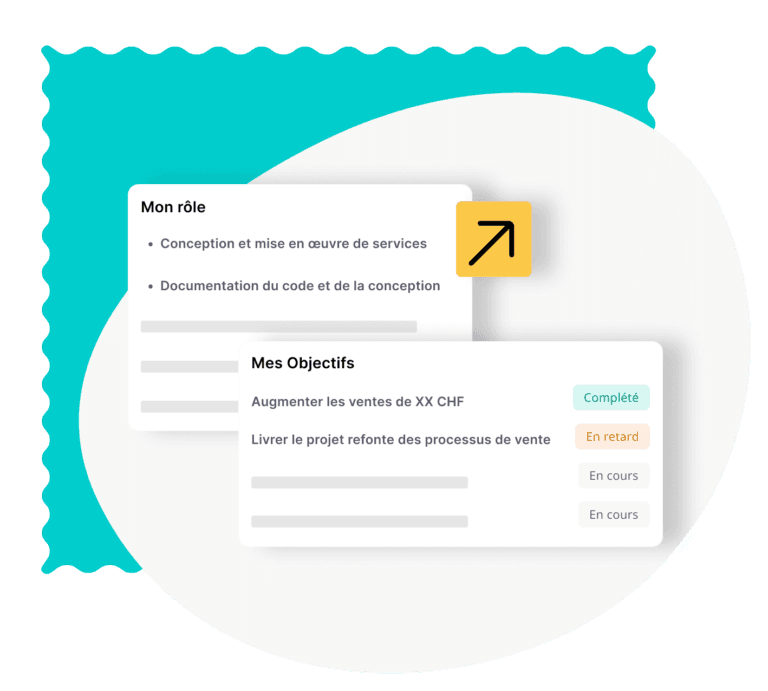
To support all these elements of the modern annual appraisal, the use of dedicated software is highly recommended. Such a tool allows for real-time performance tracking, facilitates communication and feedback sharing, and provides a platform to document and track goals and development plans. To manage annual appraisals effectively and maximize their benefits, the adoption of suitable digital solutions proves to be essential. They can also contribute to establishing transparent communication by creating a safe and accessible space for exchanges between managers and employees.
Transforming annual appraisals for a better working dynamic
As the working world continues to evolve, organizations need to review and modernize their traditional approaches, including annual appraisals. By meeting new employee expectations, adopting more comprehensive and personalized evaluation methods, and focusing on development and communication, companies can transform these reviews into constructive and beneficial moments for all parties. The right digital tools, when used wisely, can help realize this vision. Ultimately, it is less about judging past performance than preparing for the future and supporting employees in their career progression, for the benefit of both the individual and the organization.
In summary
Current Context | The trend shows a shift in the focus of employees and organizations toward well-being at work and personal development. |
Necessary Reinvention | The traditional annual appraisal is considered unsatisfying and must be rethought to meet new expectations. |
Limitations of the Traditional Approach | The traditional approach is criticized for being perceived as a one-way evaluation process, generating stress and frustration. |
Modernization Required | The annual appraisal must become a time for dialogue, exchange, and assessment of performance, potential, and employee well-being. |
New Employee Expectations | Employees seek purpose, personal development, and recognition of their potential, beyond simple performance. |
Continuous Communication and Feedback | Employees value open communication and regular feedback, which must be integrated into the modern appraisal. |
Three-Dimensional Evaluation | The modern appraisal assesses the employee across three dimensions: performance, potential, and satisfaction. |
360-Degree Feedback | It is important to integrate feedback from colleagues, clients, or vendors to obtain an objective view. |
Personalization of the Annual Appraisal | Each employee is unique; the appraisal must be personalized to foster trust and authenticity. |
Individual Development Plan | At the heart of the modern appraisal, the individual development plan sets professional goals and measurable steps. |
Clear Performance Goals | Performance goals must be SMART (Specific, Measurable, Achievable, Realistic, Time-bound) and aligned with organizational objectives. |
Open and Constant Communication | The modern appraisal must promote horizontal and vertical communication and encourage a feedback culture. |
Use of Digital Tools | Digital tools are recommended to track performance, facilitate communication, and document goals and development plans. |
Transformation for Better Dynamics | Companies must modernize their annual appraisals to meet new expectations, adopt comprehensive assessment methods, and place emphasis on development and communication. |
Future Vision | The modern appraisal prepares for the future and supports employees in their career progression, benefiting both the individual and the organization. |

Free your HR teams from tasks that add no value.
Request a demo

The Roger team
Editor of the Roger HR blog
Roger is a Swiss HRIS for HR teams in SMEs and mid-sized companies in French-speaking Switzerland. We write here about HR operations, compliance, and the employee experience.
